
A clear gameplay loop
Build around the feeling players return for.
Immersive, high-performance games across mobile, desktop, console and cloud.

Memorable games combine a strong core idea with responsive interaction, coherent worlds, striking art direction and careful technical execution.
Build around the feeling players return for.
Visuals, sound and mechanics working as one.
Give every action immediate, predictable feedback.
Plan for stable play on the platforms that matter.
Start with the outcome. Then shape the right experience, tools and technical foundation around it.
Discuss a project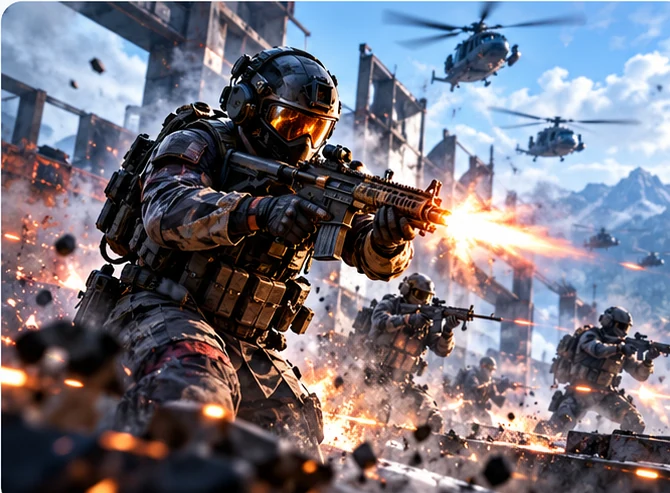
Action and arcade experiences built on readable rules, tight input response, expressive feedback and repeatable challenge.

Adventure and exploration with environmental storytelling, traversal, discovery, progression and a coherent world identity.

Racing and simulation with nuanced input, understandable physics, tuning, telemetry and stable performance.

Puzzle and experimental games where mechanics create satisfying insight, iteration and accessible difficulty progression.
Memorable games align mechanics, controls, world, pacing, sound and technical performance. The player should understand what they can do, feel the response immediately and have a reason to continue.
Define the repeatable action, feedback and reward that make the game satisfying. Make sure the loop creates interesting decisions rather than relying only on visual spectacle.
Build coherent environments, characters, materials, lighting, UI, camera language and art rules. Visual spectacle should support navigation, mood and gameplay readability.
Tune input response, movement, camera, hit feedback, audio cues, animations, accessibility options and difficulty. The player should understand why an action succeeded or failed.
Plan levels, challenges, unlocks, pacing, replayability, tutorials, save points and the path from first play to mastery. Support content growth without breaking the game’s core loop.
Build state machines, physics, interaction rules, enemy or NPC behaviours, inventory, quest state and game logic so systems cooperate predictably.
Profile frame time, loading, memory, assets and input latency. Plan platform-specific controls, build targets, save compatibility, accessibility and release validation.
The workflow deliberately proves the core loop before scaling production and keeps playability, technical risk and content scope visible throughout.
Identify target players, genre promise, emotional goal, platform, core action, distinctive decisions and boundaries for the first playable scope.
Output: game brief, pillars and target platform.Build a small, playable version of movement, interaction, challenge, feedback, reward and reset. Test feel before polishing content.
Output: playable prototype and playtest questions.Specify input mappings, camera language, tutorial flow, progression, difficulty, save points and how players learn without excessive interruption.
Output: mechanics specification and progression map.Define environment rules, asset style, lighting, materials, animation, sound, UI, readability and the production pipeline for content.
Output: visual target, content rules and vertical-slice plan.Implement state, physics, interaction, AI/NPC behaviour, inventory, quests, save/load and debug tools appropriate to the game design.
Output: tested gameplay foundations.Deliver one representative, polished segment showing the intended gameplay, art, audio, UI, technical performance and production cost.
Output: vertical slice and validated production assumptions.Combine structured playtests with frame-time, memory, load, crash, accessibility, platform and edge-case testing; prioritise issues by impact.
Output: playtest findings, performance profile and release blockers.Validate platform builds and controls, save compatibility, store assets, patching, crash reports, accessibility, moderation if relevant and post-launch responsibilities.
Output: release candidate, support plan and update roadmap.Game technology decisions should support the design intent and target hardware. A small 2D game and a large 3D world do not need the same rendering or tooling strategy.
Select an engine and asset workflow based on genre, platform targets, team skills, rendering needs and iteration speed.
Profile frame time, draw calls, memory, loading, garbage collection, physics and input latency on representative hardware.
Handle checkpoints, settings, progression, corruption recovery and version changes with clear, testable state rules.
Consider remapping, subtitle controls, readable UI, contrast options, difficulty choices, motion sensitivity and alternative input modes.
Keep NPC and world behaviours understandable, performant and debuggable; test edge cases where game systems interact.
Validate builds, control schemes, platform compliance, crash reporting, patch delivery and cross-version save behaviour.
A memorable game is not just a rendered world. The core loop, controls, camera, art direction, audio, progression, saving, accessibility and technical performance must reinforce each other. We use prototypes and playtests to prove the feel of the experience before investing heavily in content, then scale the game around the platforms and players it is designed to serve.
We state what the player does, what makes it satisfying, what decisions are interesting and why they would continue. The core loop should be testable in a small prototype. If movement, combat, puzzling or exploration is not compelling in a simple form, additional art and content usually cannot fix the underlying problem.
World layout, camera, lighting, colour, sound, animation, UI and environmental storytelling work together to communicate where to go, what matters and how an action landed. Feedback should be immediate and consistent. Accessibility settings, difficulty options and control remapping are considered early because they affect input, visual and system design.
Game state, physics, AI, inventory, quests, progression, saving and content triggers need defined ownership and testable transitions. Systems should produce interesting play without accidental contradictions. Level pacing, tutorials, challenge curves, rewards and replayability are planned as a progression through learning and mastery.
Rendering, asset streaming, memory, frame time, input latency and load time are measured on representative hardware. We plan controls, save compatibility, platform requirements, crash reporting, patching and content updates according to the game’s scale. A playable build and repeatable test process are essential throughout production, not just near release.
Playtest evidence and profiling should inform the next decision; visual polish should never hide broken feedback, unstable state or poor performance.
Players understand the objective, actions respond predictably and feedback makes successes, failures and state changes legible.
Checkpoints, settings, unlocks and save migrations behave correctly across interruption, restart and version changes.
Measure frame time, memory, load time, asset streaming and input latency on representative low and high target devices.
Review text readability, captions, remapping, contrast, motion sensitivity, difficulty options and alternate input modes.
Test physics, AI, quests, inventory, triggers and scripted sequences together to find state conflicts and unintended exploit paths.
Validate platform requirements, crash reporting, patches, compatibility, content updates and clear ownership for community or live operations.
A complete game joins rules, controls, world, sound, progression and technical performance. Every discipline should support the player’s moment-to-moment experience.
Define the player fantasy, genre, target audience, repeated action and meaningful feedback. Test whether the loop is enjoyable before expanding content or visual complexity.
Tune movement, input latency, aiming, camera behaviour, collision response, animation, haptics/audio cues and remapping. Players should understand and feel the consequences of actions.
Coordinate environment, characters, materials, lighting, readability, visual effects, interface, music and sound. Presentation should reinforce gameplay and world identity.
Plan tutorials, difficulty curves, levels, challenges, unlocks, saves, rewards and replayability. Make progression understandable and avoid systems that require unexplained grinding.
Design state machines, physics, inventory, missions, enemies/NPCs, interaction rules, multiplayer state or procedural systems appropriate to the genre and scope.
Profile frame time, memory, rendering, loading and input latency. Plan platform-specific builds, accessibility, saving, analytics, patching, community needs and post-release support.
A disciplined game project validates a small playable slice before scaling production, then builds the systems and release pipeline around the experience that has proven itself.
Player fantasy, audience, genre, differentiators, target platforms, scope assumptions and core gameplay loop.
A small playable section validating controls, camera, feedback, pacing, art direction and a representative challenge.
Mechanics, progression, levels, interaction rules, saving, UI, audio and content production pipeline.
Visual references, asset rules, character/environment requirements, animation language, sound cues and readability standards.
Target hardware, frame-time and loading budgets, input schemes, compatibility, accessibility and build pipeline.
Test plans, feedback analysis, bug triage, platform validation, save migration, patch strategy and release checklist.
Clear expectations make better projects. These answers describe the decisions usually worth making before work begins.
Discuss your requirementsNo. A prototype or vertical slice tests the core loop and technical assumptions early, reducing the risk of investing heavily in a concept that does not feel right.
Choose based on genre, platform targets, 2D/3D needs, multiplayer requirements, tools, team experience and long-term support—not popularity alone.
Profile real builds on target hardware, measuring frame time, memory, load time, input latency, asset streaming and stability under representative gameplay conditions.
Depending on the game, ongoing work may include bug fixes, balance updates, compatibility work, content releases, moderation, community support and a clear end-of-life plan.
Examples of the kinds of experiences and systems that this discipline can make possible.

Reward curiosity through environment and discovery.
Make handling and feedback feel immediate.

Build satisfying progress from a simple core idea.
Bring us the ambition, the problem or the rough sketch. We’ll work through the right next step together.
Connect with Black Hole